Managing important customer accounts requires more than maintaining regular communication and responding to immediate needs. A strategic approach helps businesses understand their most valuable accounts, identify growth opportunities, strengthen relationships, and build long-term partnerships. This is where Strategic Account Plan Templates can make a significant difference.
A strategic account plan provides a structured way to organize information about a key customer and turn that information into a clear account strategy. Instead of relying on scattered notes, spreadsheets, or individual knowledge, teams can use a consistent template to create actionable plans and keep everyone aligned.
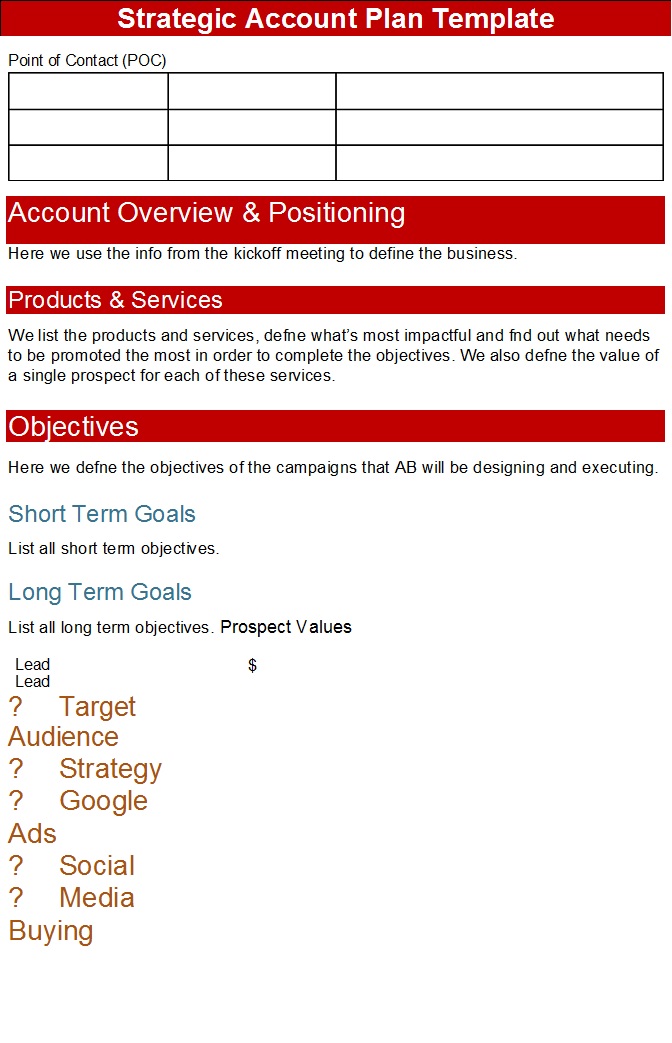
Free Strategic Account Plan Templates:
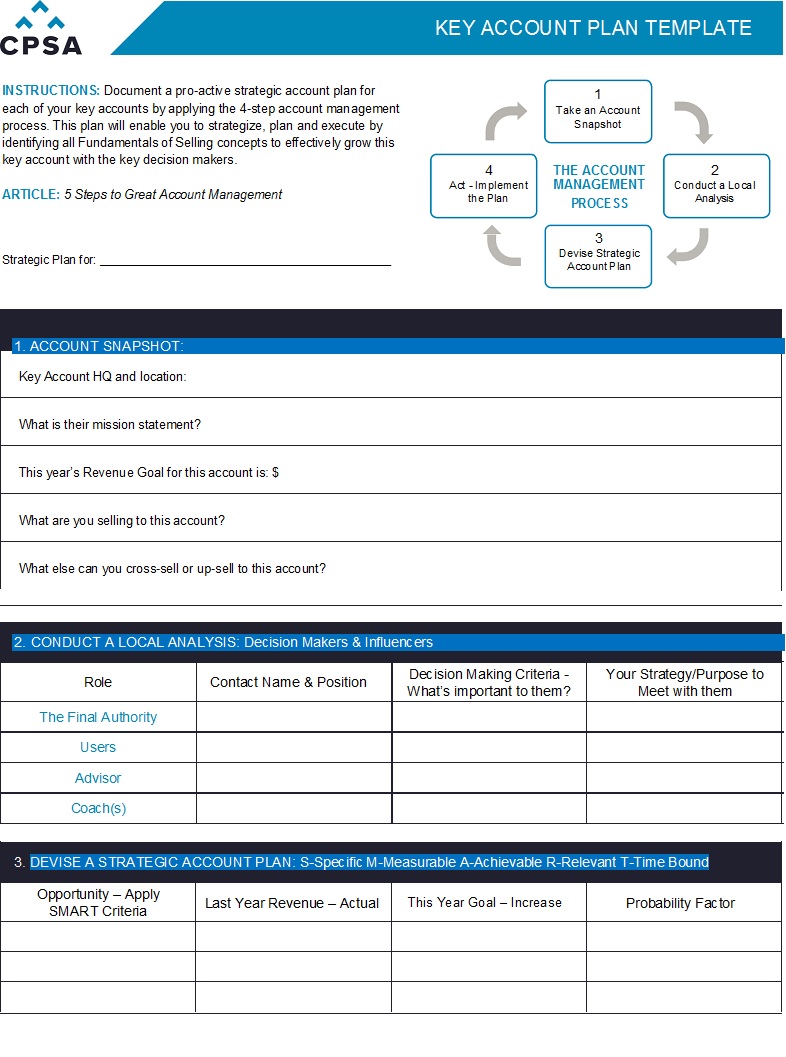

Sales Strategic Account Plan Template:
What Is a Strategic Account Plan?
A strategic account plan is a structured document that outlines how a business will manage and develop a key customer relationship over a defined period.
It typically brings together information about the customer, their business priorities, current relationship, challenges, opportunities, stakeholders, competitors, and potential areas for growth.
The purpose is not simply to document what is already happening. A good strategic account plan helps teams answer important questions such as:
-
What are the customer’s most important business priorities?
-
What value are we currently providing?
-
Who are the key decision-makers and stakeholders?
-
What challenges or risks could affect the relationship?
-
Where are the opportunities for additional value or growth?
-
What actions should we take next?
-
How will we measure progress?
Key Components of a Strategic Account Plan Template
There is no single format that works for every organization, but an effective Strategic Account Plan Template typically includes several core sections.
Account Overview
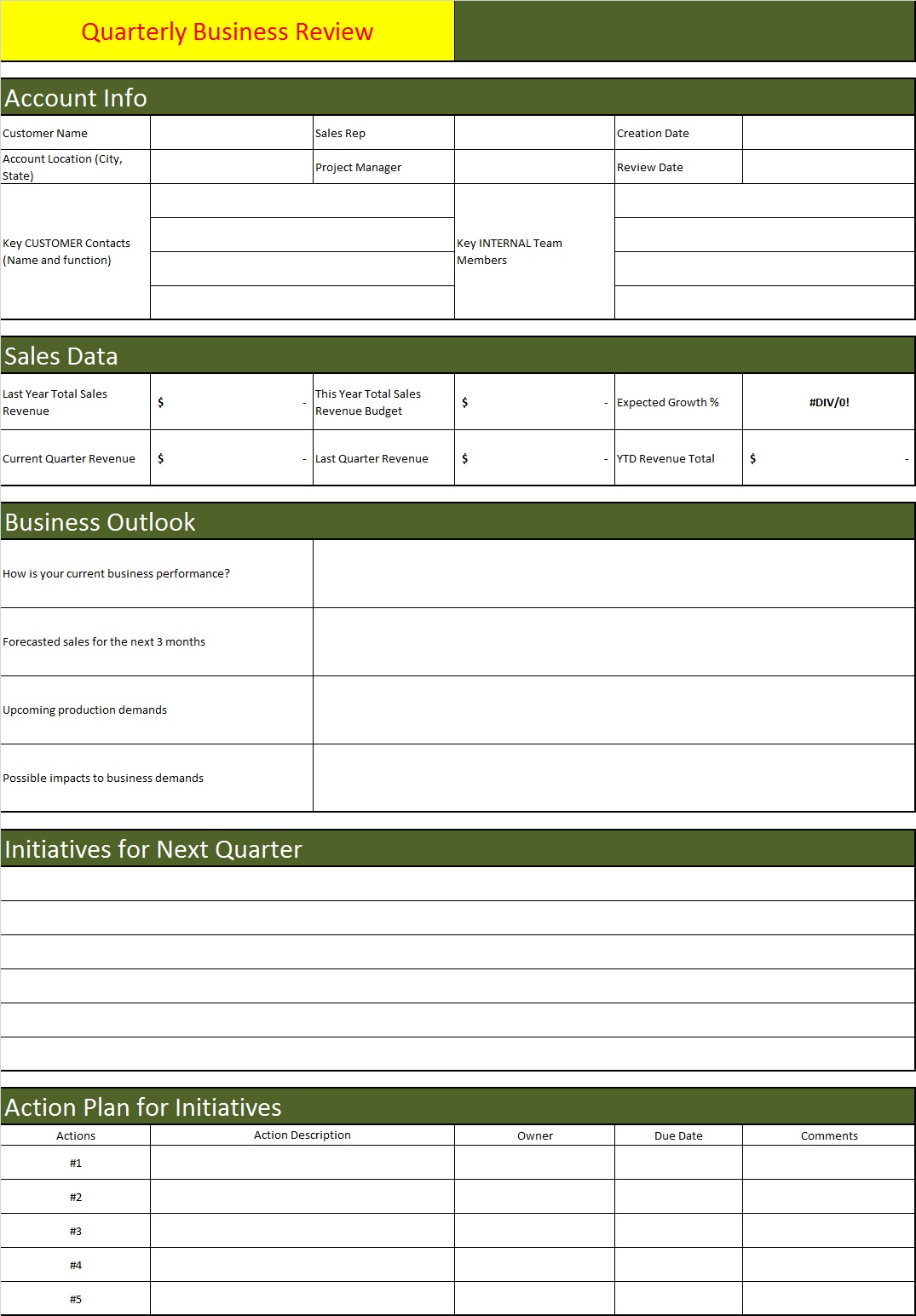
Start with basic information about the customer, including the account name, industry, location, account owner, current relationship, and relevant business information.
This section provides a quick snapshot that helps anyone reviewing the plan understand the account.
Customer Business Overview
The next section should focus on the customer’s business.
Consider documenting:
-
Business model and key offerings
-
Strategic priorities
-
Recent developments
-
Market position
-
Business challenges
-
Growth objectives
-
Relevant industry trends
The goal is to understand the customer from their perspective rather than viewing the account only through the lens of your own products or services.
Current Relationship and Account Performance
Document the current state of the relationship. This may include existing products or services, revenue, engagement levels, contract information, customer feedback, and recent performance.
This creates a baseline for measuring future progress.
Stakeholder Map
Strategic accounts often involve multiple stakeholders with different priorities and levels of influence.
A stakeholder section can help identify:
-
Decision-makers
-
Budget owners
-
Influencers
-
End users
-
Champions
-
Potential blockers
Understanding these relationships can help account teams develop a more effective engagement strategy.
Account Objectives
Clearly define what the organization wants to achieve with the account.
Objectives might include improving customer retention, expanding the relationship, increasing adoption, developing new business opportunities, or strengthening executive engagement.
Good objectives should be specific enough to guide action and measurable enough to track progress.
Opportunity Analysis
Identify current and potential opportunities within the account.
For each opportunity, consider documenting:
-
Opportunity description
-
Business need
-
Potential value
-
Key stakeholders
-
Expected timeline
-
Current stage
-
Next steps
This section turns the account plan from a static document into a practical growth tool.