What is Business Budget?
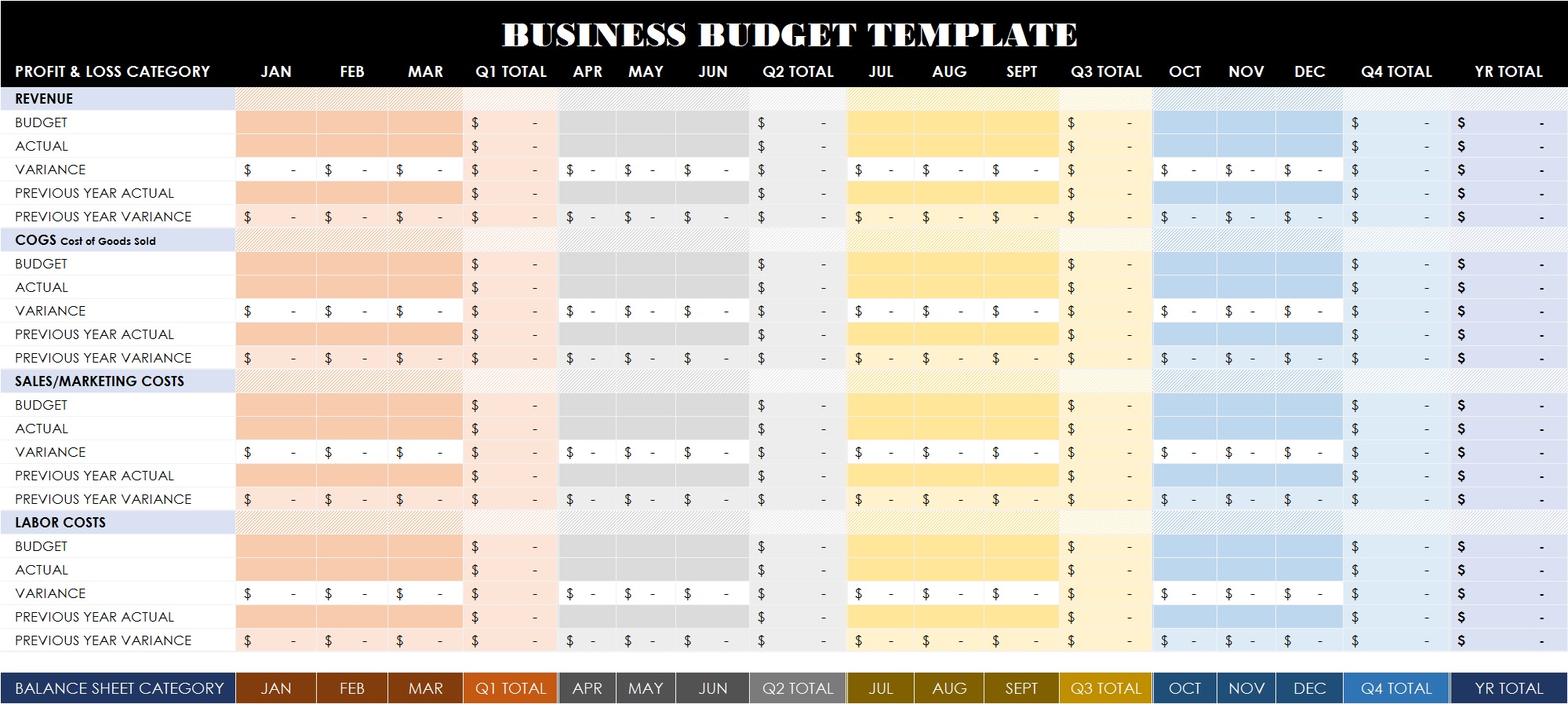
Budget planning is the most vital part of the success of any business or venture. And by Business Budget, we mean analyzing your total revenue, planning your income and creating an estimate of total sources for your Business plan. The following post, you will find some best templates of Business Budget Planning. In business, budget is a very important part of management policy. At the start of the year, the management team makes a business budget and targets, decides the profit, and the growth of the business. Hence plans to get certain targets for the entire year.Most business budget templates include categories for revenue, operating expenses, payroll, marketing, utilities, rent, equipment, taxes, and other financial activities. Some templates are designed for monthly budgeting, while others can be used for quarterly or annual planning.
Benefits of Business Budget Template:
Advanced or pre-budget of business gives you a competitive edge. With the help of a good budget, you can. A good budget increases get closer and even achieve your goals through winning the trust of stakeholders and business persons. A proper budget plan reduces the risk and the cost of the project. Consequently, increasing profitability. A good budget gives you a lot of new ways to achieve targets efficiently and timely. Budget Proposal Template.

How To Make A Business Budget?
Business budgeting is crucial step for a company to achieve its strategic objectives. It provides a roadmap to daily operations and how they are going to happen. It plans ans pre plans the specific actions, responsibilities and liabilities of a department even before its commencement. Business Budgeting help the company finance to stay over the top and readies a company to meet any challenges. See also Zero Base Budget Template.
Edit And Download Business Free Budget Samples:
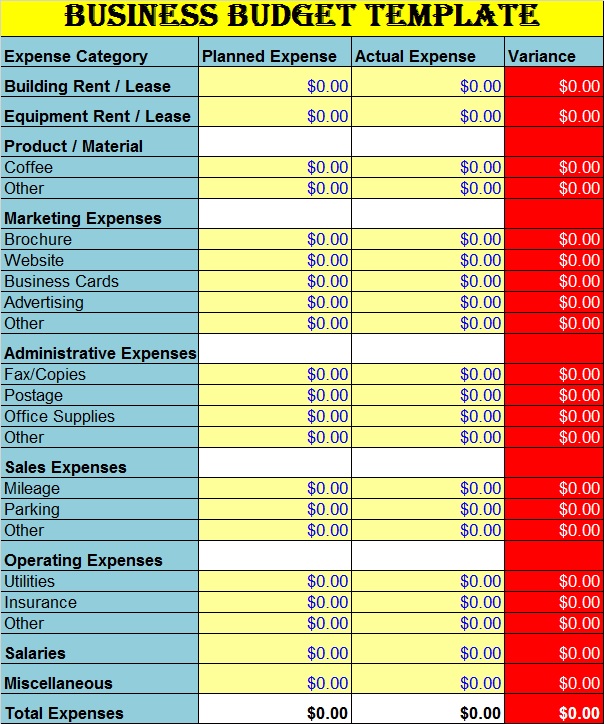
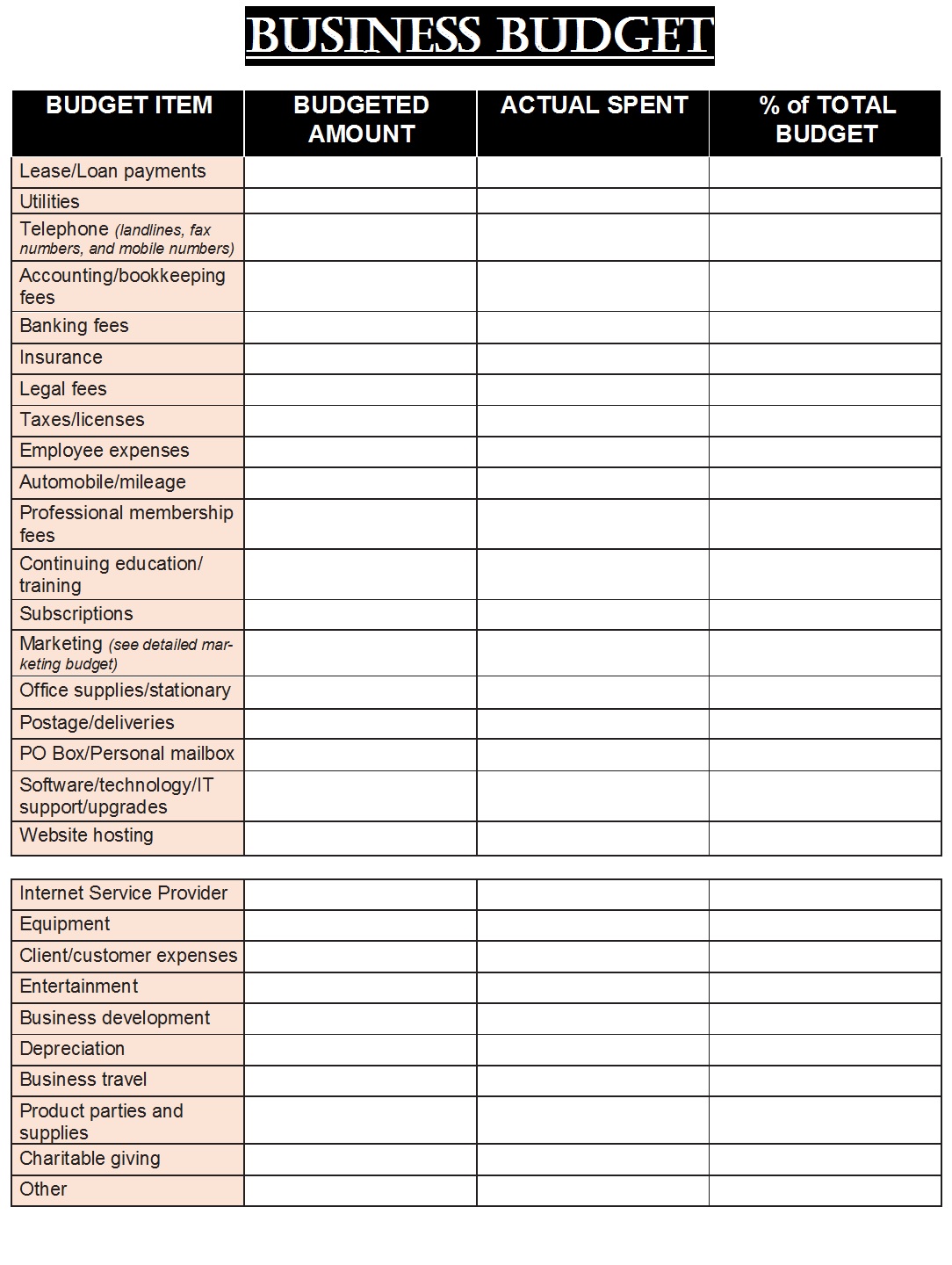
Here are given many business budget templates in MS Excel and word format. Download Business Budget Format that suits your requirements. Use it as a guide or edit it as per your plan. Most budgets give plan on yearly basis. But you can edit on quarterly basis or even monthly basis. Download the template by clicking the free “download’ button below each templates. Open it in your system and start editing.
Key Components of a Business Budget Template
A useful business budget template should include several important financial categories.
1. Revenue
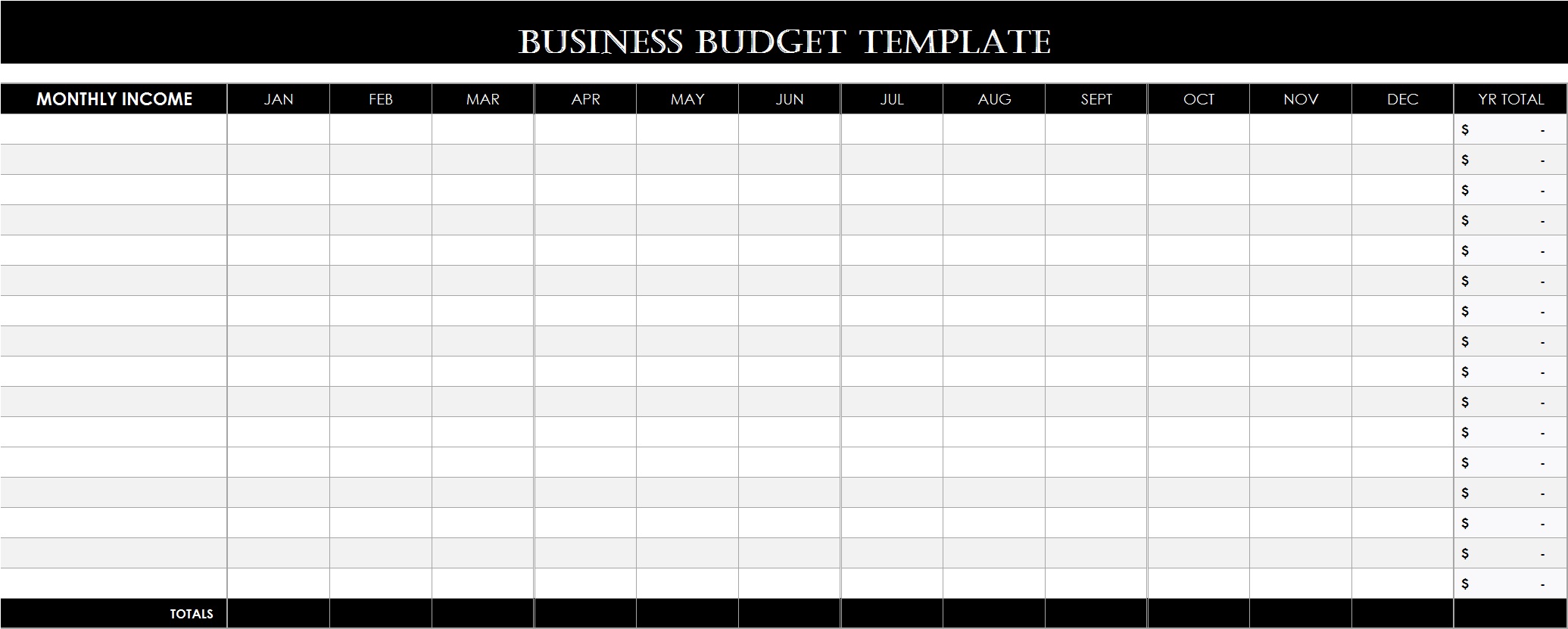
Revenue is the money a business expects to earn during a specific period. Depending on the business model, revenue may come from product sales, service fees, subscriptions, commissions, or other sources.
A detailed template can separate different revenue streams so business owners can identify which products or services generate the most income.
2. Fixed Expenses
Fixed expenses are costs that generally remain consistent from month to month. Examples include rent, insurance, software subscriptions, loan payments, and certain salaries.
Tracking these expenses helps businesses understand their minimum monthly financial obligations.
3. Variable Expenses
Variable expenses change depending on business activity. Examples include shipping costs, raw materials, sales commissions, packaging, advertising, and transaction fees.
Monitoring variable expenses is particularly important because these costs can increase as sales grow.
4. Payroll and Employee Costs
For businesses with employees, payroll can represent a significant portion of total expenses. A budget should account for salaries, wages, bonuses, benefits, payroll taxes, and other employee-related costs.
Accurate payroll budgeting can help prevent cash shortages and ensure that the company is prepared for its regular employee obligations.
5. Marketing and Advertising
Marketing expenses should also be included in the budget. These may include social media advertising, search engine marketing, website development, content creation, promotional materials, and events.
Businesses can compare marketing expenses with sales results to determine which activities provide the best return on investment.
6. Cash Flow
Cash flow is another essential part of business budgeting. A company may appear profitable on paper but still experience financial difficulties if cash does not arrive when bills are due.
A cash-flow section can help businesses estimate when money will come in and when payments will need to be made.

Types of Business Budget Templates
Different businesses require different budgeting approaches. Fortunately, there are several types of templates available.
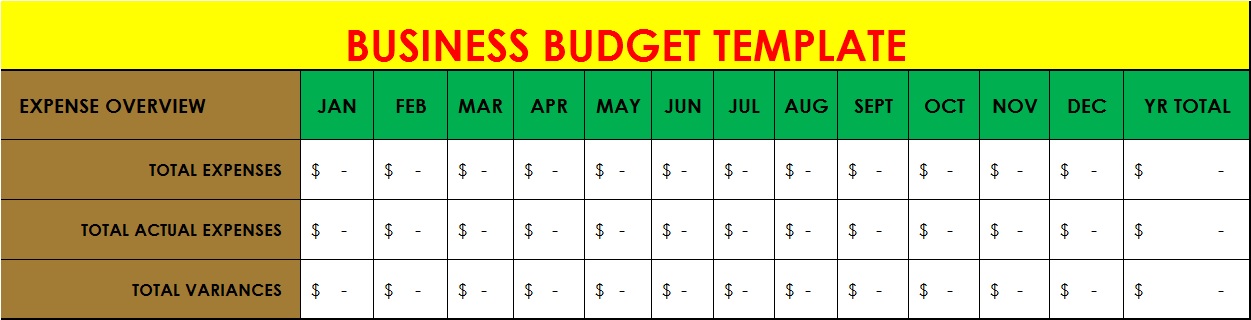
Monthly business budget templates are ideal for businesses that want to monitor their finances regularly. They make it easier to compare actual income and expenses with monthly targets.
Annual business budget templates provide a broader view of expected revenue and expenses throughout the year. They are useful for long-term planning and setting yearly financial goals.
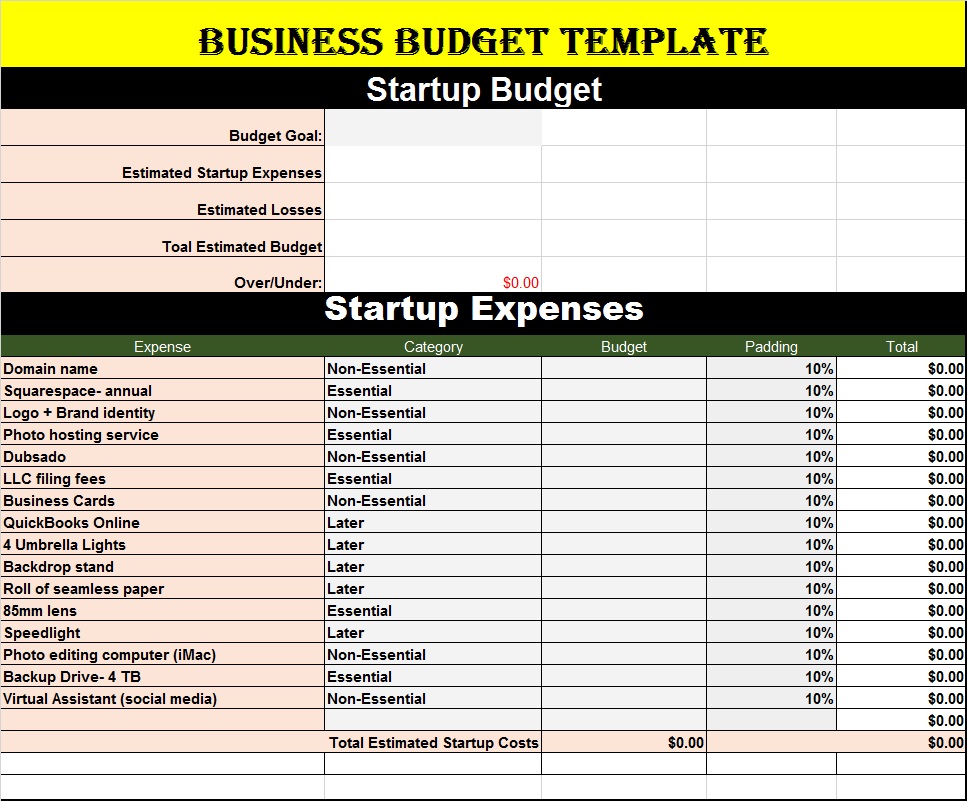
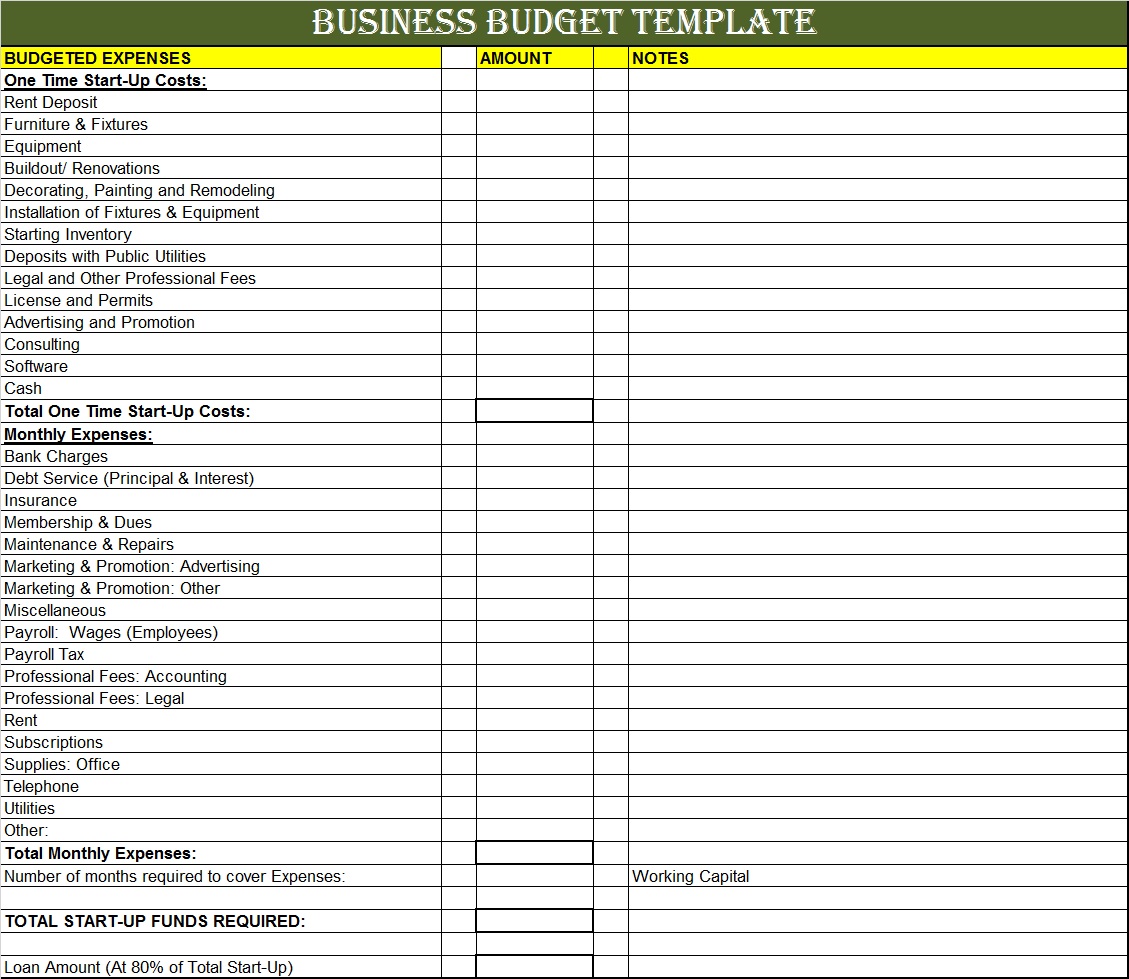
Startup budget templates are designed for new businesses. They typically include startup costs such as business registration, equipment, office space, inventory, branding, website development, and initial marketing.
Project budget templates are useful when a business needs to track the costs associated with a particular project. They can include labor, materials, equipment, contractors, and other project-related expenses.
Cash-flow budget templates focus specifically on incoming and outgoing cash. They can help businesses anticipate periods when cash may be limited.
Tips for Managing a Business Budget
A budget is most effective when it is regularly updated. Avoid creating a budget once and forgetting about it. Review it at least monthly and make adjustments when business conditions change.
It is also helpful to maintain a separate emergency fund whenever possible. Unexpected expenses can affect even financially healthy businesses.
Keep personal and business finances separate as well. Using separate accounts makes it easier to track business transactions and maintain accurate financial records.
Frequently Asked Questions About Business Budget Templates
1. What is a business budget template?
A business budget template is a ready-made financial planning document that helps businesses organize income, expenses, cash flow, and financial goals. It can be customized according to the company’s needs.
2. Why should I use a business budget template?
A business budget template saves time and makes financial planning easier. It helps you monitor expenses, estimate revenue, control spending, and make informed business decisions.
3. What should a business budget template include?
A basic template should include expected revenue, fixed expenses, variable expenses, payroll, marketing costs, taxes, operating costs, cash flow, and projected profit.
4. Can small businesses use budget templates?
Yes. Business budget templates are particularly useful for small businesses because they provide a simple way to track finances without requiring complicated financial systems.
5. How often should I update my business budget?
It is generally helpful to review your budget every month. Regular reviews allow you to compare actual results with projections and make adjustments when revenue or expenses change.
6. What is the difference between a business budget and a cash-flow budget?
A business budget focuses on planned income and expenses, while a cash-flow budget focuses specifically on when money is expected to enter and leave the business. Both can be useful for financial planning.
7. Can I create a business budget template in Excel?
Yes. Microsoft Excel is commonly used for business budgets because it allows users to create formulas, organize financial categories, calculate totals, and compare budgeted figures with actual results.
8. What is a startup business budget template?
A startup business budget template is designed for new businesses and typically includes initial costs such as equipment, inventory, registration fees, office expenses, website development, branding, and marketing.
9. Should I include taxes in my business budget?
Yes. Businesses should account for expected tax obligations when preparing their budgets. Including taxes can help prevent unexpected financial pressure when payments become due.
10. Can a business budget help increase profits?
A budget can contribute to higher profitability by helping businesses identify unnecessary expenses, control costs, set realistic revenue targets, and allocate resources more effectively.
11. Is a business budget template suitable for large companies?
Yes. Larger companies can use more detailed templates to manage departmental budgets, projects, payroll, capital expenditures, revenue forecasts, and other financial activities.
12. What is the best business budget template?
The best business budget template is one that matches your company’s size, industry, financial goals, and accounting needs. A simple template may be sufficient for a small business, while larger organizations may require more detailed budgeting tools.